DeFi Token Performance & Investor Trends Post-October Crash: A Data-Driven Reality Check for 2025
Okay, let's talk Cronos (CRO). The reports are in, and the picture isn't exactly rosy. We're seeing a post-October dip that has the usual suspects – DEXs, lending platforms, yield farms – all feeling the pinch. The question, as always, is whether this is a buying opportunity or a sign of deeper rot.
The FalconX report lays it out pretty clearly: only 2 out of 23 leading DeFi tokens are positive year-to-date as of November 20th. CRO, predictably, is not one of them. The entire cohort is down 37% quarter-to-date, which, let's be honest, is brutal. But averages can be deceiving.
DeFi Downturn: A Flight to "Quality" or Chasing Illusions?
Digging Into the DeFi Details What's interesting is the divergence in investor behavior. Some are flocking to what they perceive as safer harbors – tokens with buyback programs, like HYPE and CAKE. Others are chasing "fundamental catalysts," idiosyncratic events that give certain tokens a temporary boost. MORPHO and SYRUP are cited as examples here, tokens that either dodged a bullet (the Stream finance collapse) or found a new pocket of growth. This points to a flight to perceived quality, which is fairly typical during a downturn. But here's where things get murky. The report notes that some DeFi subsectors have become *more* expensive relative to September 30th, while others have cheapened. Spot and perpetual decentralized exchanges (DEXs) have seen their price-to-sales multiples compress, meaning their prices have fallen faster than their protocol activity. This suggests a lack of faith in the long-term viability of these platforms, or at least a belief that their growth is slowing. Lending and yield names, on the other hand, have seen their multiples *increase*. KMNO, for instance, saw its market cap fall 13%, while its fees declined a whopping 34%. This is counterintuitive. You'd expect lower fees to translate to lower valuations, but investors seem to be piling into lending platforms, perhaps viewing them as "stickier" than trading platforms. The logic being, even in a downturn, people will still need to borrow and lend. Lending activity may even pick up as investors exit to stablecoins and seek yield opportunities. Now, here’s the methodological critique – and this is where I get skeptical. These reports often rely on publicly available data, which can be gamed. Protocols can incentivize certain behaviors (like lending) through token emissions, artificially inflating their fee numbers. Are investors genuinely flocking to these platforms, or are they just chasing yield in a desperate attempt to recoup their losses? It's hard to say definitively without access to more granular on-chain data (transaction-level data, wallet analysis, etc.).Cherry-Picking the Bull Case: A Grain of Salt Required
The Bull Case: A Distorted Picture? Coinspeaker paints a slightly different picture, or at least emphasizes different aspects of the landscape. They highlight Bitcoin's historical resilience, Solana's institutional adoption, and XRP's regulatory clarity. And, of course, they tout a list of "best cryptos to buy" for December 2025, including a few early-stage tokens with "higher growth potential." But even Coinspeaker acknowledges the mid-October liquidation event (a staggering $638 million wiped out). They frame it as a "pullback" that presents an "optimal entry point," which is classic marketing spin. Every dip is a buying opportunity, until it isn't. What *is* interesting is their breakdown of established versus early-stage crypto. They recommend allocating more capital to established large-caps (Bitcoin, Solana, XRP) and a smaller amount to early-stage tokens (Ondo, Immutable) based on risk tolerance. This is sound advice, and it reflects the broader trend we're seeing in the market: a flight to safety. Now, here’s a personal aside I want to inject: I’ve looked at hundreds of these "best crypto to buy" lists, and they all follow the same basic formula. They tout the potential upside while downplaying the risks. They present a narrative of inevitable growth, even when the data suggests otherwise. My analysis suggests that a more nuanced approach is needed, one that acknowledges the inherent uncertainties of the market. For Cronos specifically, the future is uncertain. One source states CRO is likely to remain within its current tight range unless stronger momentum develops. A close above $0.109 would be the first sign of renewed bullish interest, potentially opening room for a short-term recovery. If buyers fail to reclaim that level, price may continue drifting sideways as selling pressure persists near the upper boundary.Cronos: Winter is Here, But is Spring Possible?
Can Cronos Survive the Crypto Winter? So, back to the original question: buy the hype, or bury the hatchet? The answer, as always, is it depends. It depends on your risk tolerance, your investment horizon, and your belief in the long-term viability of the Cronos ecosystem. The Cronos chain is actively developed and has real-world utility through payment, DeFi, and Web3 applications, but its price performance has remained subdued, reflecting limited momentum. Given the current market conditions, a cautious approach is warranted. Don't go all-in on CRO based on some bullish prediction. Do your own research, understand the risks, and only invest what you can afford to lose.The Numbers Don't Lie
The Verdict: A Calculated GambleRelated Articles
Powell's Speech: Decoding the Market Impact and Future Rate Cuts
All eyes are on Washington, D.C. tomorrow. Not on Congress, not on the White House, but on a single...

Cathay's Big Green Stunt: What We Know and Why It's Probably BS
So, let me get this straight. Cathay Pacific and Airbus, two titans of an industry that basically ru...
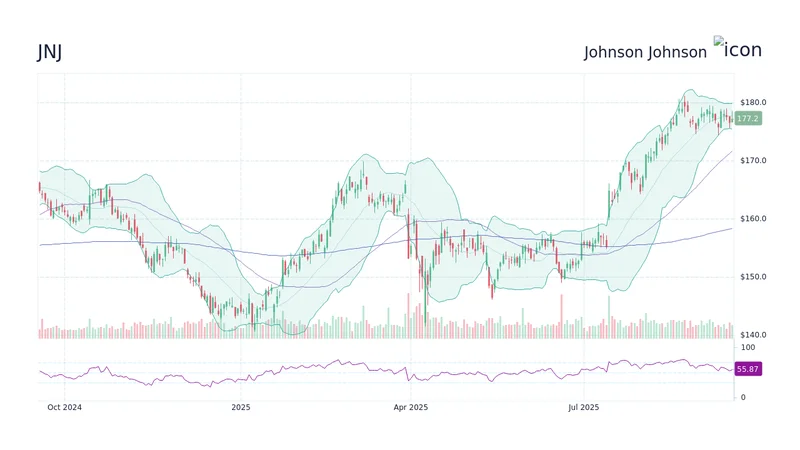
Beyond JNJ's Stock Price: The Breakthrough Science and Future Vision Everyone is Missing
It’s easy to get lost in the noise. On any given Monday, you can watch the digital ticker tape scrol...

GMA's Deals and Steals: A Surprising Glimpse into the Future of Retail
I want you to look past the popcorn tins and the splatter guards for a moment. On October 11th, a se...

Crypto Market Faces Headwinds: Analyzing the Macro Signals Driving the Dip
Generated Title: Bitcoin's Silent Standoff: Why a Sideways Market Masks a Brewing Storm The chatter...

Exxon's Earnings 'Beat' Is a Joke: Here's Why the Stock Is Actually Down
Exxon's Earnings, NBC's Cookies, and a Broken Webpage: My Brain Is Melting. Let’s just get this out...